


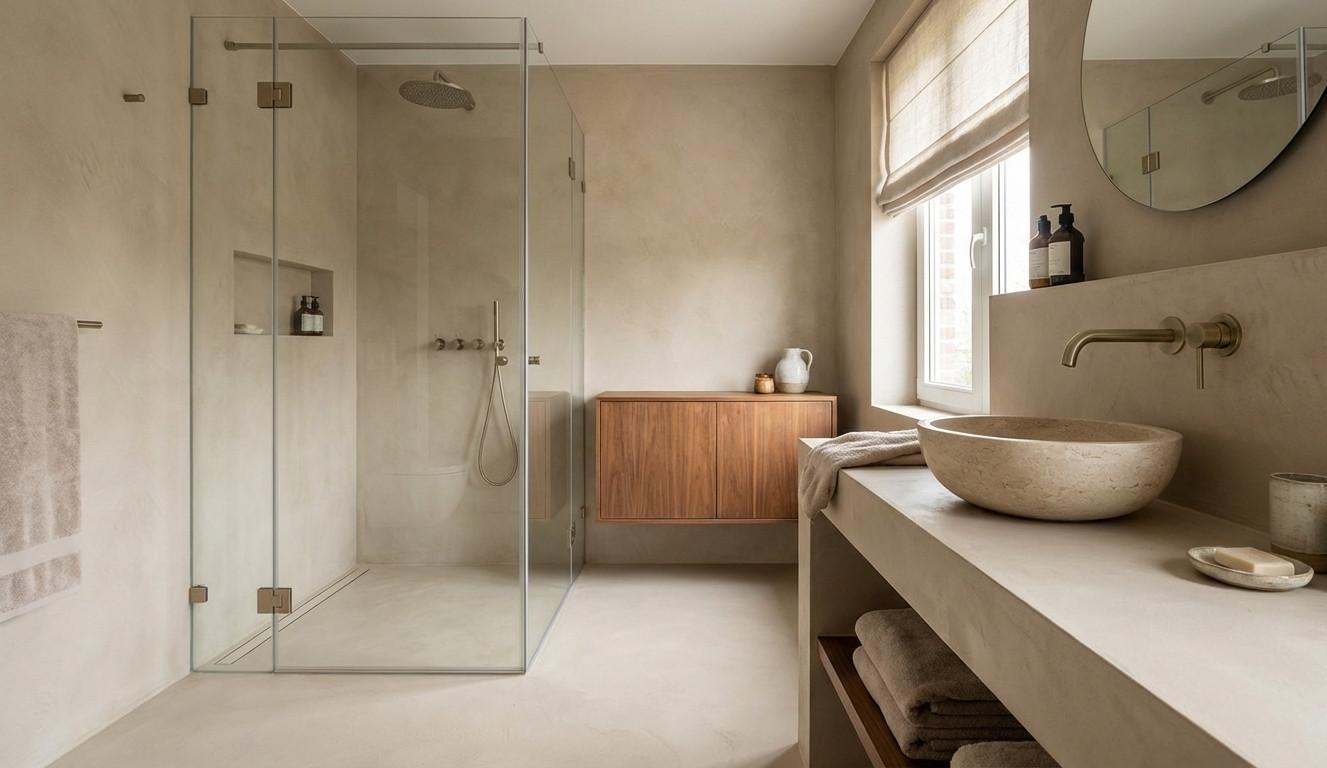
From spa-inspired bathrooms and contemporary kitchens to upcycled furniture and statement worktops, microcement is opening a new chapter in Irish home décor.
There is a quiet transformation taking place in Irish interiors. Homeowners are looking beyond traditional tiles, conventional worktops and mass-produced finishes in search of something more individual: surfaces that feel architectural, tactile and effortlessly contemporary.
At the centre of this shift is microcement.
Once associated primarily with designer bathrooms, polished concrete aesthetics and high-end commercial interiors, microcement is finding a much wider audience. It is appearing on kitchen islands, bathroom walls, vanity units, countertops, shelving and furniture, offering homeowners new ways to rethink familiar spaces without necessarily starting from scratch.
For Ireland's growing community of self-builders, renovators, interior designers and DIY enthusiasts, this versatile finish is becoming more than a material choice. It is helping to create a new category in home décor — one where the surface itself becomes a defining design feature.
And as awareness grows, Irish suppliers including Microcement.ie and Stone Age Ireland are helping bring specialist products, design inspiration and application knowledge closer to the people creating these interiors.
01 — The bathroom: where the movement began
Few spaces demonstrate the appeal of microcement quite as effectively as the modern bathroom.
The traditional bathroom was often defined by rows of tiles, contrasting grout lines and separate finishes for every surface. Today's design-conscious homeowner is increasingly interested in a more unified approach, where walls, floors, shower areas and vanity surrounds work together as one considered composition.
Microcement makes this aesthetic possible through a thin, hand-applied decorative coating that creates a continuous mineral-style finish. Depending on the chosen colour, texture and application technique, the result can range from soft limestone-inspired minimalism to a more dramatic, industrial character.
Warm beige, sand, greige and earthy tones work beautifully with natural oak, brushed brass, soft lighting and organic accessories. Deeper charcoal and stone-grey finishes create a bolder architectural statement.
The appeal is visual as well as practical. Fewer visible joints can create a calmer appearance, while a consistent finish helps smaller bathrooms feel more connected and spacious.
For Irish homeowners planning a renovation, systems such as Odeco microcement offer possibilities for bathrooms, wet rooms, floors, walls and selected surfaces.
However, a beautiful bathroom begins with the correct technical specification. Shower areas require suitable substrate preparation, waterproofing, drainage and compatible protective coatings. Microcement should be specified as part of a complete system rather than treated as a substitute for essential wet-room construction.
The result, when properly designed and installed, is a bathroom that feels less like a purely functional room and more like a private retreat.
02 — The kitchen: worktops become design statements
If bathrooms introduced many homeowners to microcement, kitchens may be where its creative potential becomes most apparent.
The kitchen island has evolved into much more than a place to prepare food. It is a gathering point, a social centrepiece and often the defining feature of an open-plan living space. Its finish therefore matters as much as its shape.
Microcement introduces an alternative to conventional stone, laminate and tiled finishes, creating a continuous, hand-finished appearance that can complement both modern and traditional cabinetry.
Imagine an existing island transformed with a textured, warm-stone finish. Add oak cabinetry, sculptural pendant lights and understated hardware, and an ordinary kitchen feature becomes something that feels individually designed.
Splashbacks and selected worktops can also be considered as part of a coordinated material palette, allowing the same colour family or texture to flow through the room.
For homeowners who want a more distinctive interior, the freedom to choose from different colours and finishes is particularly appealing. A soft, chalky neutral can create understated elegance, while metallic effects or richer tones can bring a more expressive, contemporary character.
The important consideration
Not every microcement system is suitable for every kitchen surface. Worktops experience abrasion, heat, spills, cleaning products and everyday impact. The chosen system must be explicitly suitable for the intended use, with appropriate preparation, sealing and maintenance. Always follow the manufacturer's technical guidance, particularly around heat and food-contact requirements.
At Microcement.ie, homeowners and tradespeople can explore specialist systems, tools and advice when considering a kitchen transformation. For broader material inspiration, Stone Age Ireland showcases finishes designed for walls, floors and furniture.
The opportunity is not simply to create a concrete effect. It is to give the kitchen a more cohesive identity.
03 — Upcycling: giving old furniture a new architectural life
Perhaps the most interesting development in microcement is its movement beyond permanent architectural surfaces and into furniture and decorative objects.
Consider the old bedside table, sideboard, console or occasional table that no longer suits a home's aesthetic. Instead of replacing it, imagine giving it a completely different identity through a mineral-textured finish.
A dated piece can become a contemporary focal point. A simple shelving unit can take on the character of bespoke joinery. A tired table base can be reimagined in a warm, stone-inspired colour that complements the surrounding interior.
This is where microcement meets the growing appeal of upcycling, personalisation and considered consumption.
Rather than buying another mass-produced object, homeowners can explore ways to adapt existing pieces to a new design direction. The finished result can feel more individual because the texture, tone and application marks give each surface its own character.
There are practical considerations, of course. Furniture must be structurally sound, and the surface must be compatible with the selected coating system. Preparation, adhesion, reinforcement where specified and protective sealing are essential. Flexible or unstable substrates may require specialist advice.
Not every item will be suitable, but the possibilities are compelling for DIY enthusiasts who enjoy transforming what they already own.
This is a significant opportunity for microcement to move into the world of home accessories and decorative finishes. Its role is no longer limited to the walls and floors of a building; it can become part of the furniture and objects that give a home its personality.
04 — A new category in home décor
Traditional decorating often separates the home into familiar categories: paint for walls, tiles for bathrooms, stone for worktops, timber for furniture and accessories for the finishing touches.
Microcement challenges those boundaries.
One material family can help create a visual connection between several elements of an interior. A bathroom vanity may echo the tone of a wall. A kitchen island may share a finish with a feature wall. A decorative plinth or shelving detail may continue the same mineral aesthetic into a living area.
This creates an opportunity for a more unified approach to interior design.
The finish itself becomes part of the décor, with texture, movement, colour and light taking the place of some of the pattern and contrast traditionally provided by tiles, wallpaper or decorative panels.
It also allows designers to explore the relationship between contrasting materials. Microcement alongside oak feels warm and grounded. Paired with brass, it can feel sophisticated. Combined with linen, natural stone and muted lighting, it creates a relaxed, contemporary atmosphere.
The trend is not necessarily about making every surface concrete-coloured. In fact, the strongest interiors often use microcement selectively, balancing its mineral character with softer materials, colour and carefully chosen objects.
For Irish homes, this versatility opens the door to everything from understated rural renovations to contemporary city apartments and characterful period properties.
The emerging opportunity is a new space between building materials and home décor: a surface-led design category in which the finish is not simply functional, but central to the look and feel of a room.
05 — Meet the people helping shape Ireland's microcement market
Material knowledge matters: colour samples, tools and technical advice help turn an interior concept into a workable project. Visit Microcement.ie.A growing design movement needs more than attractive photographs. It needs access to products, reliable technical information and people who understand how different systems behave in real-world applications.
One of the names associated with the development and promotion of microcement in Ireland is John Keogh, connected with Microcement.ie and the Odeco microcement offering, alongside the wider specialist market represented by Stone Age Ireland.
Through product education, industry engagement and published material on microcement applications, Keogh has helped bring attention to the possibilities of these finishes for Irish homes and commercial interiors. His work reflects a wider shift in the market: moving microcement beyond a specialist contractor's material and introducing it to designers, renovation professionals, self-builders and homeowners.
At Microcement.ie, the emphasis includes Odeco microcement, specialist application tools, product selection and support for projects ranging from bathrooms to kitchens and decorative surfaces.
Meanwhile, Stone Age Ireland presents a complementary collection of European surface solutions, including Basebeton microcement for walls, floors and furniture, alongside other decorative mineral finishes.
Together, these businesses illustrate how the market is expanding beyond the supply of a single product. Showrooms, material samples, application knowledge and training all help people understand what is possible — and what is required to achieve a successful finish.
For the homeowner, this matters. A photograph may inspire the idea, but choosing the correct system, preparing the surface and understanding the application process determine whether the finished project meets expectations.
06 — DIY, self-builders and the new creative homeowner
Another factor broadening the appeal of microcement is the growing appetite for hands-on home improvement.
Online tutorials, renovation videos and interior design content have made specialist finishes more visible to people who might previously have left such decisions entirely to a contractor.
For a confident DIY enthusiast, a small decorative project or suitable furniture makeover may offer an introduction to the material. More demanding applications, particularly showers, wet rooms and high-use worktops, require greater technical understanding and may be better entrusted to an experienced professional.
This creates a new relationship between product suppliers and customers. People want more than a tub of material: they want to understand surface preparation, tools, colour selection, application techniques and finishing.
The availability of suitable DIY systems, clear instructions and practical advice can make the process more accessible, without suggesting that every project is straightforward or every substrate is suitable.
For self-builders, this knowledge can help them make informed decisions about where to invest in professional installation and where a manageable project might be completed themselves.
Microcement is therefore contributing to a wider home-improvement culture in which people are more involved in designing, personalising and sometimes creating the finishes around them.
07 — The Irish aesthetic: warmth, texture and individuality
The future of microcement in Ireland is unlikely to be defined by one colour or a single interior style.
Instead, its appeal lies in its adaptability. Some homeowners will prefer the understated simplicity of pale limestone tones. Others will choose earthy browns, deeper mineral shades or expressive metallic finishes. Some will use it across a large architectural surface, while others will introduce it through one carefully selected piece of furniture.
This flexibility fits an approach to contemporary interiors that values material quality, tactile detail and a sense of individuality.
It also makes microcement relevant to projects of different sizes and budgets, although costs depend on the selected system, substrate condition, preparation and whether application is undertaken professionally or as a DIY project.
The key is thoughtful specification. A well-designed interior does not need every surface to compete for attention. Sometimes a single microcement island, a textured bathroom wall or a renewed sideboard is enough to change the character of an entire room.
The verdict: more than a passing trend
Microcement is changing how homeowners and designers think about surfaces. Its appeal stretches from seamless bathrooms and contemporary kitchens to upcycled furniture and decorative objects, connecting architecture with the finer details of home décor.
For Ireland, the opportunity lies in combining design ambition with practical knowledge. Homeowners are discovering new ways to personalise their spaces, while specialist suppliers are helping them explore the materials, systems and skills needed to bring those ideas to life.
As the market develops, microcement may become known not just as a specialist coating, but as a design language in its own right — one built around texture, continuity, versatility and the reinvention of familiar surfaces.
For those ready to explore that possibility, two useful starting points are Microcement.ie for Odeco products, tools and project guidance, and Stone Age Ireland for Basebeton and other decorative surface solutions.
The next big change in your home may not require a completely new room. It may begin with looking at the surfaces you already have — and imagining what they could become.